




The Casting Process:
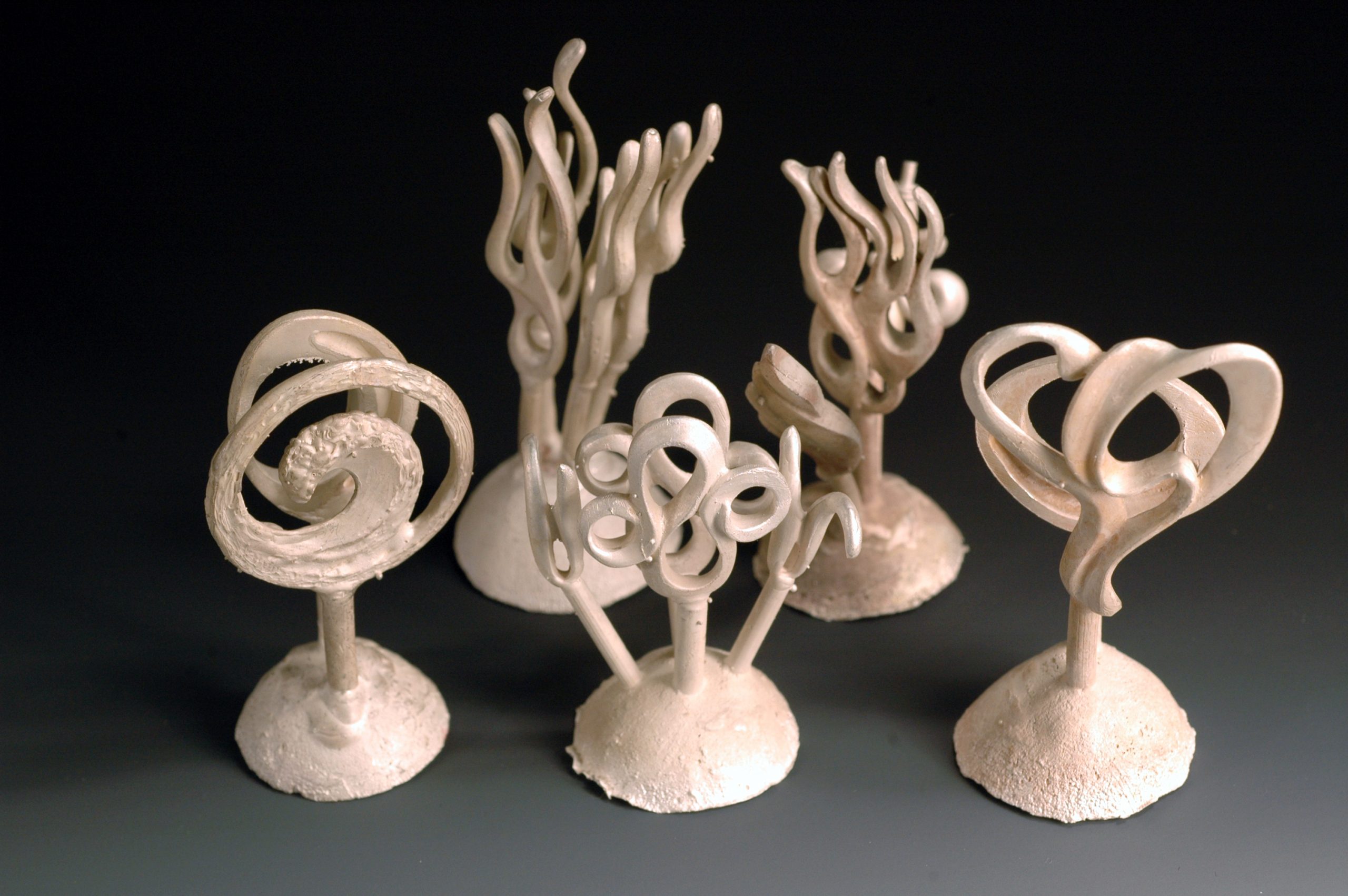
Pictured are the cast trees in metal. They have a button that is a base, and the sprues are the rods or limbs holding the different designs making it a tree. What you see in metal, all started in wax. Once the waxes are sprued, the tree is centered within a cylindrical flask and an investment is poured inside the flask that envelopes the wax, and that investment which is a type of plaster, sets up. Then the flask goes into a kiln for many hours to burn out the waxes. Once the wax is gone from inside the flask, molten metal is either forced from a centrifugal caster, or poured into the flask from a vacuum type caster to fill the voids, cooled and then you will have the casting in metal. Notice the dull finish of the silver after the casting process. The next step would be to cut the designs away from the sprues and then start filing and sanding, and possibly soldering other parts, then again the silver changes and needs more sanding to refinish, then polishing the silver. So many people have said they thought you just pop the silver piece out of a mold, but it isn’t that way at all. It’s time consuming to finish a cast piece from start to finish. Having molds made of the original finished cast piece will save you from carving the piece in wax each time, but usually the waxes need to be prepared or modified which takes some time, also the casting process, and the finishing process of the cast piece, all takes time.
Notes about working in sterling silver… sterling silver is a precious metal that requires more time to finish than working with gold. Generally speaking, it is a labor intensive process to finish silver to a bright finish once it’s been heated, more than you might imagine. Many jewelers will not work with silver because of the labor involved and their customers know that silver can be made inexpensively by mass production and they may not understand the cost differences of mass produced jewelry and finely finished handmade pieces. When sterling silver is cast or soldered, the heat turns the silver finish to a dull, chalky looking whitish-grey once the silver cools. It actually takes patience and skill to finish silver beautifully. Silver is a great heat conductor and heats rapidly when polishing, and it’s easy to burn your fingers! Silver is more affordable than gold as a raw metal but the labor to create with silver could take much longer than gold. Silver from mass production is usually tumbled and not hand polished to a fine finish, but if you compare the details of a finely finished silver to a mass production piece, you will see the difference.

Leave A Comment
You must be logged in to post a comment.